Tell us about your role at CIT and what you oversee day-to-day.
I help oversee our welding and fabrication operations, making sure projects move smoothly from engineering to production while maintaining quality and efficiency.
How did you get into welding and manufacturing in the first place?
I didn’t perform well in traditional college and decided to go to a welding school in Ohio after seeing a friend’s success doing the same. Welding gave me a way to create something tangible, and that naturally led me deeper into manufacturing.
What does having welding in-house allow CIT to do differently than companies that outsource it?
It gives us more control. We can react quickly, communicate directly, and keep a closer eye on quality and scheduling throughout the entire project.
Why is close collaboration between welding, engineering, and fabrication so important?
The best results happen when everyone is working together. Good communication helps solve problems early and keeps projects moving in the right direction.
What kinds of projects or industries benefit most from CIT’s welding capabilities?
Our welding capabilities support a wide range of industries, including aerospace, industrial vehicle cabs, and automotive rack systems. These projects often require high-quality fabrication, tight tolerances, and dependable welds, which is where our team adds a lot of value.
How does having an in-house welding team improve quality control and problem solving?
When the welders, fabricators, and engineers are all under one roof, issues can be identified and solved much faster before they become bigger problems.
What are some of the biggest misconceptions people have about welding and manufacturing today?
A lot of people think it’s all repetitive manual labor, but modern manufacturing requires technical skills, critical thinking, and a lot of precision.
What makes a great welder beyond just technical skill?
Attention to detail, a strong work ethic, pride in your work, and the ability to adapt when challenges come up.
How has welding technology or the industry changed during your career?
Equipment has become more advanced, automation is more common, and technology plays a bigger role than ever. But skilled people are still what make everything work.
What does CIT look for when hiring welding and manufacturing talent?
We look for people who are dependable, willing to learn, work well with a team, and take pride in producing quality work.
What are some of the most challenging or rewarding projects you’ve worked on at CIT?
One of the most rewarding projects I've worked on was helping qualify welding procedures, then qualifying welders to those procedures, and eventually helping with the first build of an all aluminum industrial vehicle cab. Seeing that project go from development to a finished product was something I was really proud to be part of.
Why does craftsmanship still matter in advanced manufacturing?
Technology can help improve efficiency, but craftsmanship is what ensures the final product is built right and meets the highest standards.
What makes CIT’s culture different from other manufacturing companies?
There’s a strong sense of teamwork here. People are willing to help each other, share ideas, and do what it takes to get the job done right.
What advice would you give young people considering a career in welding or skilled trades?
Don’t overlook the trades. They offer great opportunities, solid careers, and the satisfaction of building something you can be proud of.
What are you most proud of when you look at the work CIT produces?
I’m proud of the quality of the work and the people behind it. Our team takes ownership of what we build, and that shows in the finished product.
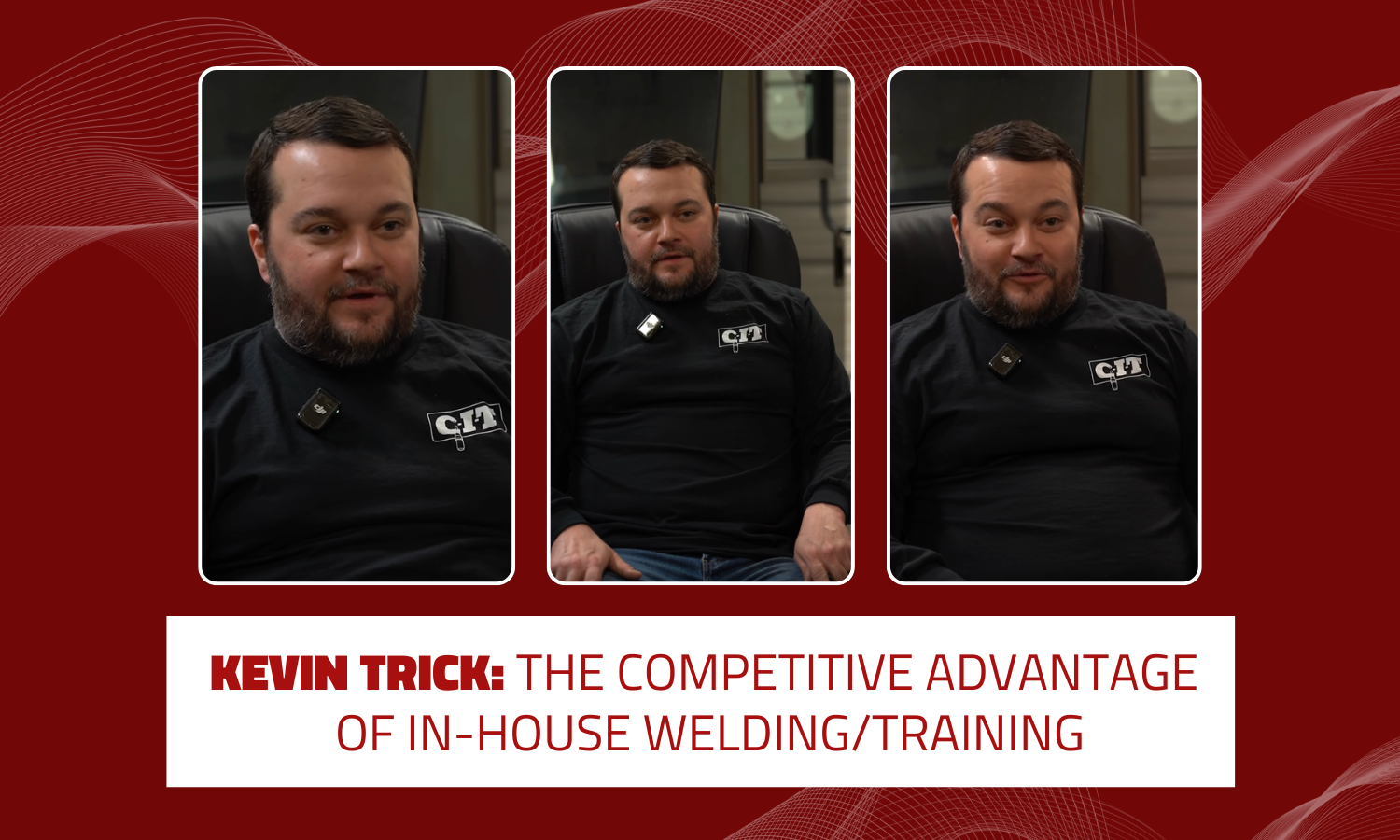
Kevin Trick: The Competitive Advantage of In-House Welding/Training
Previous
Previous
Driving Innovation Together: C-I-T & ADVANCE
Next
Next